
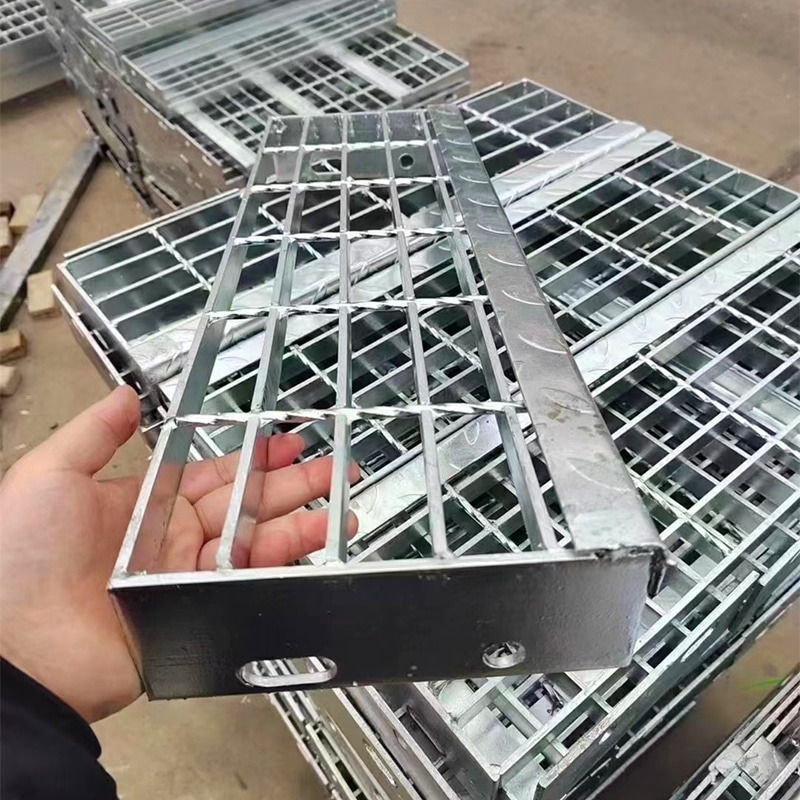
There is no one‑size‑fits‑all approach to selecting steel grating stair treads. Different industries and environments have completely different requirements. Choose correctly, and the treads will last over a decade without problems. Choose poorly, and you will face either increased maintenance costs or even safety risks.
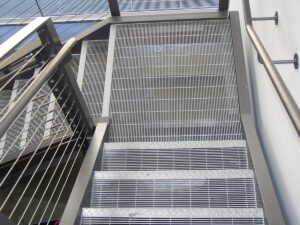
This article presents six real‑world case studies to help you understand how to select the right treads under different conditions.
1. Three Essential Factors Before Selection
Regardless of the scenario, clarify these three factors first:
1. Service environment – Indoor or outdoor? Wet or dry? Are there corrosive agents(salt spray, acids/alkalis, oil)?
2. Load requirements – Pedestrian traffic only, or equipment too? Vehicle access? Any concentrated loads(e.g., forklift wheel pressure)?
3. Installation method – Permanent installation or does it need regular disassembly for maintenance?
Once these three are clear, material, specification, and type selection become straightforward.
2. Typical Scenario Case Studies
 Scenario 1: Power plant boiler platform stairs
Description: A coal‑fired power plant has multi‑level operating platforms connected by steel stairs. Workers use the stairs frequently for equipment inspection and routine operations. The stairs are indoors, but the boiler room is hot(summer temperatures 40–50°C)with occasional floor washing. No strong corrosive agents.
Selection analysis:
-
Environment: Indoor, hot, occasionally wet → carbon steel + hot‑dip galvanising is sufficient
-
Load: Personnel access, occasional tool carrying → standard load
-
Installation: Permanent facility, no disassembly needed → welding
Recommended solution:
-
Material: Carbon steel Q235 + hot‑dip galvanising(zinc layer ≥70μm)
-
Type: T3(welding, with leading edge guard)
-
Specification: Flat bar 32×5mm, bar spacing 30mm, cross bar spacing 100mm(G325/30/100)
-
Tread width: 800mm(single‑person access standard)
-
Riser height: 200mm
-
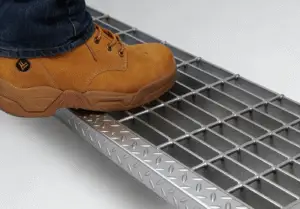
Anti‑slip: Serrated flat bars + leading edge guard
Rationale: Power plant access platforms typically require load capacity of ≥4kN/m². G325/30/100 is a common specification for power plant stairs, balancing load capacity and cost. Serrated flat bars handle occasional wet washing, while the leading edge guard provides extra edge protection for frequent use. Hot‑dip galvanising gives a service life of over 15 years in indoor conditions.
Scenario 2: Chemical plant outdoor stairs
Description: A chemical plant has outdoor steel stairs connecting production units at different elevations. The stairs are exposed to the elements in a coastal city with salt spray in the air. Chemical leaks or cleaning agent residues occasionally come into contact with the metal, causing corrosion.
Selection analysis:
-
Environment: Outdoor, coastal salt spray, chemical exposure → requires strong corrosion resistance
-
Load: Personnel + small equipment handling → medium load
-
Installation: Permanent → welding
Recommended solution:
-
Material: 316L stainless steel
-
Type: T3(welding, with leading edge guard)
-
Specification: Flat bar 40×5mm, bar spacing 30mm, cross bar spacing 100mm
-
Tread width: 800mm
-
Riser height: 200mm
-
Anti‑slip: Serrated flat bars + leading edge guard
-
Finishing: Pickling and passivation
Rationale: 316L stainless steel contains molybdenum, providing outstanding resistance to acids, alkalis, and salt spray – ideal for coastal and chemical environments. 304 stainless steel has limited corrosion resistance in salt spray, so 316L is the correct choice here. Serrated flat bars provide effective slip resistance in wet and oily conditions. Pickling and passivation remove welding oxides and restore the stainless steel’s corrosion resistance.
Scenario 3: Food processing plant stairs
Description: A meat processing plant has multiple floors connected by stainless steel stairs. The workshop is washed and disinfected frequently – floors and stairs are often wet. Hygiene standards are extremely high: no rust risk, and tread surfaces must be easy to clean with no dead corners.
Selection analysis:
-
Environment: Indoor, wet, frequent cleaning/disinfection → corrosion‑resistant and easy to clean
-
Load: Personnel + trolleys moving raw materials → standard load
-
Installation: Needs regular disassembly for cleaning → bolting
Recommended solution:
-
Material: 304 stainless steel
-
Type: T4(bolting, with leading edge guard)
-
Specification: Flat bar 30×4mm, bar spacing 30mm, cross bar spacing 50mm
-
Tread width: 900mm
-
Riser height: 180mm
-
Anti‑slip: Serrated flat bars + leading edge guard
-
Finishing: Brushed finish
Rationale: Food processing plants have strict hygiene standards and must use stainless steel to prevent rust. 304 stainless steel offers good corrosion resistance and is the most common grade. Bolted T4 type allows regular disassembly for thorough cleaning, eliminating hygiene dead corners. Closer cross bar spacing(50mm instead of 100mm)prevents small tools or parts from falling through. A brushed finish is more scratch‑resistant than a mirror finish and easier to clean daily.
Scenario 4: Offshore platform stairs
Description: An offshore oil production platform has steel stairs connecting different deck levels, exposed to a harsh high‑salt marine environment. The stairs endure sea spray, wind erosion, frequent personnel traffic, and occasional equipment handling. Safety requirements are extremely high.
Selection analysis:
-
Environment: Marine high‑salt spray, sea spray → highest level of corrosion protection required
-
Load: Personnel + equipment → high load
-
Installation: Permanent → welding
Recommended solution:
-
Material: 316L stainless steel
-
Type: T3(welding, with leading edge guard)
-
Specification: Flat bar 40×5mm, bar spacing 30mm, cross bar spacing 50mm
-
Tread width: 800mm
-
Riser height: 200mm
-
Anti‑slip: Serrated flat bars + leading edge guard(mandatory)
-
Finishing: Pickling and passivation
Rationale: The marine environment is one of the most corrosive – 316L stainless steel is the minimum standard. Serrated flat bars are especially effective in wet, slippery conditions like offshore platforms. The 30mm bar spacing provides the strongest resistance to impact.
Note: In recent years, an increasing number of offshore projects explicitly prohibit welding of steel grating and require 316 stainless steel mounting clips instead. Always confirm the specific installation specifications for your project before selecting.
Scenario 5: Municipal wastewater treatment plant stairs
Description: A municipal wastewater treatment plant has outdoor steel stairs connecting various tanks and treatment structures. The stairs are in a persistently humid environment with hydrogen sulphide and other corrosive gases in the air. Personnel use the stairs for routine inspection, occasionally carrying small testing equipment.
Selection analysis:
-
Environment: Outdoor, high humidity, mildly corrosive gases → requires good corrosion protection
-
Load: Personnel + small equipment → medium load
-
Installation: Needs regular inspection and maintenance → bolting
Recommended solution:
-
Material: Carbon steel Q235 + hot‑dip galvanising(zinc layer ≥80μm)
-
Type: T4(bolting, with leading edge guard)
-
Specification: Flat bar 30×5mm, bar spacing 30mm, cross bar spacing 100mm
-
Tread width: 900mm
-
Riser height: 180mm
-
Anti‑slip: Serrated flat bars + leading edge guard
Rationale: Although wastewater plants have some corrosive elements, hot‑dip galvanised carbon steel(zinc layer ≥80μm)is sufficient – and far more cost‑effective than stainless steel. Bolted T4 type allows easy disassembly and replacement during future maintenance. Serrated flat bars provide reliable slip resistance in high‑humidity conditions. The 5mm flat bar thickness is more durable than the usual 3mm, better handling occasional equipment handling.
Scenario 6: Heavy‑duty mining stairs
Description: An underground mine has steel stairs in the main inclined shaft for miners’ daily access and emergency escape. The stairs experience frequent personnel traffic, with dust and mild moisture present. High wear resistance and structural strength are required.
Selection analysis:
-
Environment: Underground, dusty, mildly wet → requires wear‑resistant, anti‑slip
-
Load: Frequent personnel + emergency evacuation → high load
-
Installation: Permanent → welding
Recommended solution:
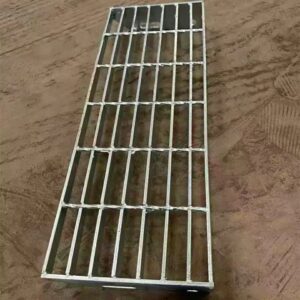
Material: Carbon steel Q235 + hot‑dip galvanising
-
Type: T3(welding, with leading edge guard)
-
Specification: Flat bar 40×5mm or 50×5mm, bar spacing 30mm, cross bar spacing 100mm
-
Tread width: 1000mm(accommodates two‑abreast or evacuation routes)
-
Riser height: 200mm
-
Anti‑slip: Serrated flat bars + leading edge guard
Rationale: Mine stairs serve as personnel access and emergency evacuation routes, so safety and load capacity requirements are higher than general industrial stairs. Tread width should be at least 1000mm to allow simultaneous evacuation of multiple people in emergencies. Flat bar thickness should be 5mm or more to prevent vibration from frequent foot traffic. Serrated flat bars provide reliable slip resistance in dusty conditions.
3. Selection Summary Table
| Scenario | Recommended Material | Recommended Type | Key Specification | Core Considerations |
|---|---|---|---|---|
| Power plant boiler platform | Carbon steel + hot‑dip galvanising | T3(welding) | G325/30/100 | Cost‑effective, heat & moisture |
| Chemical plant outdoor coastal | 316L stainless steel | T3(welding) | 40×5/30/100 | Salt spray & chemical resistance |
| Food processing plant | 304 stainless steel | T4(bolting) | 30×4/30/50 | Hygiene, easy cleaning, removable |
| Offshore platform | 316L stainless steel | T3 or clips | 40×5/30/50 | Maximum corrosion protection, high slip resistance |
| Municipal wastewater plant | Carbon steel + hot‑dip galvanising | T4(bolting) | 30×5/30/100 | Corrosion protection + removable maintenance |
| Heavy‑duty mining | Carbon steel + hot‑dip galvanising | T3(welding) | 40×5/30/100 | High load capacity, wear‑resistant, anti‑slip |
 4. Selection Recommendations
-
Material first – look at the environment – Indoor dry → carbon steel hot‑dip galvanised; outdoor wet → hot‑dip galvanised; coastal chemical → 316L; food hygiene → 304.
-
Type first – look at installation – Permanent → T1/T3(welding); needs maintenance → T2/T4(bolting).
-
Safety first – look at slip resistance – Wet, oily, outdoor environments – serrated flat bars + leading edge guard are standard. Do not compromise slip resistance to save money.
-
Width – look at traffic – Minimum 600mm for single‑person access; frequent two‑abreast traffic or evacuation routes should be ≥1200mm.
-
Load – look at flat bar specification – Thicker and wider flat bars = greater load capacity. General personnel access: 25×3mm or 30×3mm; equipment handling: 30×5mm or 40×5mm and above.
Our service: If you are unsure which specification of steel grating stair treads is right for your project, simply provide the service environment, load requirements, and stair dimensions. We can prepare a detailed selection recommendation for you free of charge.